


Municipal Flagpole Installation
Engineered installations built to serve government facilities, public parks, courthouses, fire stations, and civic spaces — done right the first time, built to last for decades.
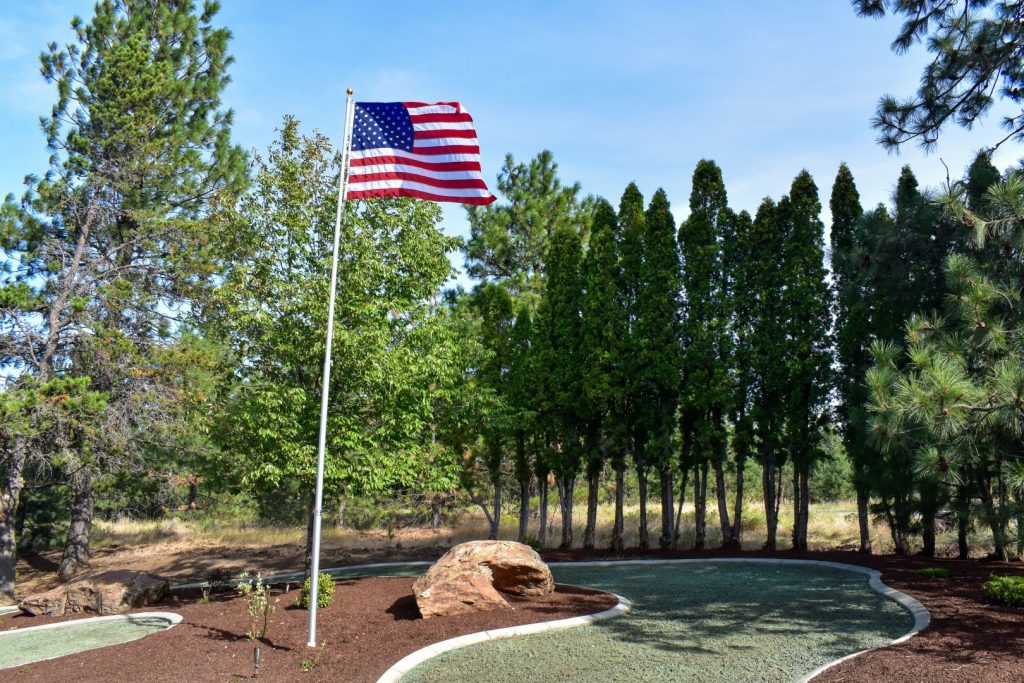
A flagpole at a government building, public park, or civic facility is more than a structural element — it is a statement of community identity, national pride, and institutional permanence. When residents approach a courthouse, municipal office, veterans memorial, or fire station and see the American flag flying cleanly at the proper height, it communicates professionalism, respect, and civic responsibility.
Municipal flagpole installation carries a different set of requirements than a standard residential or commercial project. Government properties must account for wind-load engineering, building code compliance, site-specific permitting, flagpole height restrictions, and the long-term maintenance demands that come with continuous daily use. Getting these details wrong can result in structural failure, code violations, costly retrofits, and — in worst-case scenarios — safety hazards to staff and the public.
All States Flag & Pole specializes in professional flagpole installation for government and public-sector clients throughout the Mid-Atlantic region and beyond. Our team brings hands-on experience, engineering knowledge, and a thorough understanding of the standards that apply specifically to municipal and institutional flagpole projects.
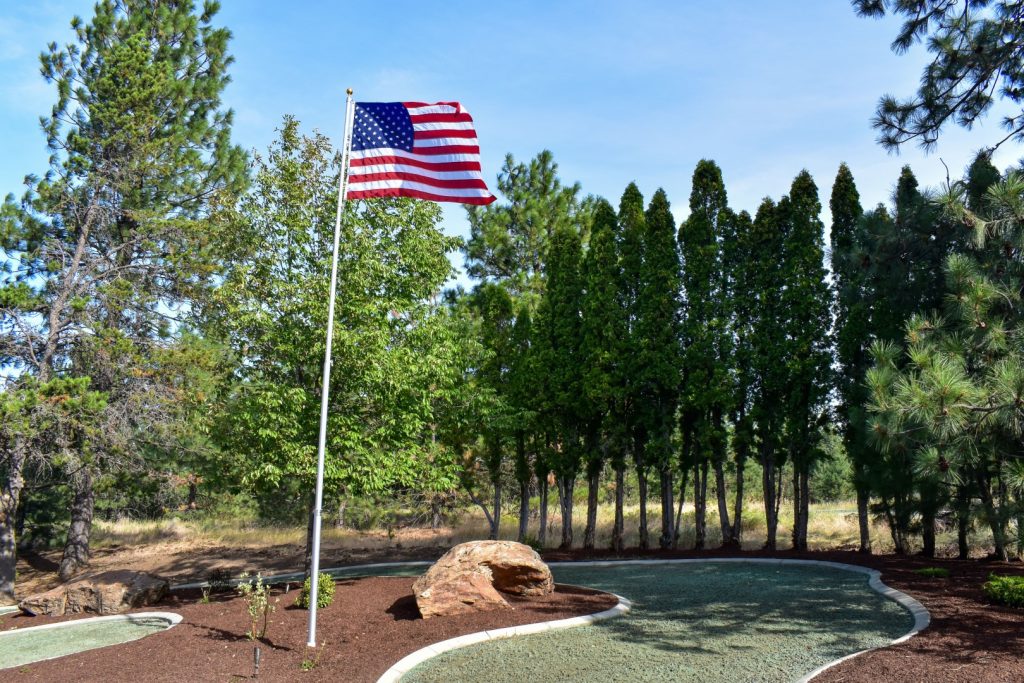
🇺🇸 Municipal flagpoles are subject to stricter engineering and permitting requirements than most other installations. Professional installation from an experienced flagpole contractor protects your investment, ensures code compliance, and guarantees a safe, lasting result.
Why Choose All States Flag & Pole for Your Municipal Project
Public-sector projects demand accountability. Municipalities, townships, counties, and state agencies need a flagpole contractor who understands the stakes — from permitting and foundation engineering to timeline adherence and documentation. All States Flag & Pole brings that level of professionalism to every project we take on.
Engineering-Backed Installations
Every municipal installation is assessed for wind loads, soil conditions, and structural requirements to ensure long-term integrity.
Permitting Support
We assist with permit applications, technical drawings, and coordination with local building departments to streamline your project.
Deep Foundation Expertise
Proper concrete foundations are essential for tall municipal poles. Our crews are experienced with high-load foundation installations.
Quality Equipment
We source commercial-grade aluminum, fiberglass, and steel flagpoles rated for continuous government use and severe weather exposure.
Crane Capability
Taller municipal flagpoles often require crane installation. We have the equipment and expertise to handle large-scale installations safely.
Project Documentation
We provide complete project records, including foundation specs and hardware details — useful for maintenance planning and future reference.
Our Municipal Flagpole Installation Process
Government installations require a structured, transparent process. From initial consultation through final inspection, every step is handled with attention to detail and clear communication with your facilities team or project manager.
Initial Consultation & Needs Assessment
We begin by understanding your project — number of poles, flag sizes, height requirements, display configurations, and any specific protocols required for government flag display. We discuss budget, timeline, and site access considerations upfront.
Site Evaluation
Our team visits the facility to assess soil conditions, underground utilities, drainage, visibility sightlines, proximity to structures, and any grading issues that might affect foundation placement and pole positioning.
Product Recommendations & Specifications
Based on site conditions and your requirements, we recommend the appropriate pole height, material (aluminum, fiberglass, or steel), halyard system (internal or external), and finish. We provide detailed specifications suitable for procurement and permitting review.
Permitting Coordination
We assist with the permit application process, providing engineering data, load calculations, and documentation required by your local building department or municipal planning authority.
Foundation Preparation & Excavation
Proper foundation installation is the most critical step in a municipal project. We excavate to the specified depth, set the ground sleeve or anchor bolt template, and pour reinforced concrete to engineered specifications. Curing time is respected before any pole is set.
Flagpole Erection
Depending on pole height and site access, we use equipment ranging from rubber-tired cranes to telescoping boom trucks. The pole is set precisely plumb, all hardware is installed, and halyard systems are threaded and tested.
Final Inspection & Walkthrough
Once installation is complete, we conduct a thorough inspection to confirm plumb alignment, foundation integrity, hardware function, and flagpole performance. We walk your facilities staff through proper flag-raising procedures and maintenance requirements.
Ongoing Maintenance Guidance
We provide recommendations for routine flagpole maintenance, including halyard inspection, hardware lubrication, and periodic professional service — helping you protect the investment for years to come.


Benefits of Professional Municipal Flagpole Installation
Selecting a qualified flagpole contractor for your government facility delivers measurable advantages over attempting to manage the project with general contractors or in-house crews unfamiliar with flagpole-specific engineering.
Code Compliance from Day OneProper permitting and engineering ensures your installation meets local building codes and flag display regulations without costly corrections after the fact.
Built for Severe WeatherMunicipal flagpoles must withstand constant exposure. Our installations are engineered for regional wind-load requirements, protecting both the pole and surrounding property.
Low Long-Term MaintenanceQuality materials and proper installation reduce the frequency and cost of ongoing maintenance. Aluminum flagpoles in particular are virtually corrosion-proof.
Professional Civic AppearanceA correctly proportioned, properly positioned flagpole enhances the visual dignity of any government facility and signals institutional pride to residents and visitors.
Enhanced SafetyAn improperly installed pole is a liability. Professional installation eliminates the risk of foundation failure, pole tipping, or hardware malfunction that could injure staff or the public.
Long Service LifeCommercial-grade flagpoles properly installed in engineered foundations routinely last 30 to 50 years with standard maintenance — a strong return on a public expenditure.
Types of Municipal Facilities We Serve
All States Flag & Pole has experience working with a wide range of government and public-sector facility types. Each project type presents distinct requirements around pole height, number of poles, display configurations, and access considerations.
Flagpole Equipment & Materials for Municipal Applications
The right flagpole for a government facility depends on several factors: the height required, the number of flags to be flown, the wind zone, aesthetic expectations, and long-term maintenance preferences. All States Flag & Pole sources and installs poles from reputable manufacturers built to commercial and institutional specifications.
| Material | Common Heights | Typical Municipal Use | Key Advantages |
|---|---|---|---|
| Commercial Aluminum | 20 – 80 ft | City halls, courthouses, parks, schools | Lightweight, corrosion-resistant, low maintenance, anodized finish options |
| Fiberglass | 20 – 60 ft | Coastal facilities, areas with corrosion risk | Non-conductive, UV-resistant, excellent in salt-air environments |
| Steel (Carbon / Galvanized) | 40 – 100+ ft | Large government plazas, ceremonial entrances | Maximum strength for very tall poles, suitable for high-wind zones |
| Stainless Steel | 20 – 50 ft | High-visibility civic installations | Premium appearance, excellent corrosion resistance, minimal upkeep |
Halyard System Options
- Internal Halyard with Winch: The rope is concealed inside the pole and accessed via a lockable door — strongly recommended for municipal installations to prevent vandalism and unauthorized lowering of flags.
- External Halyard: Traditional rope-and-cleat system running along the outside of the pole. Simpler and more economical, though less secure for high-traffic public areas.
- Electric Internal Halyard: Motor-driven system suitable for facilities where manual flag-raising is not practical or where ceremonial automated display is desired.
Foundation Systems
- Ground Sleeve Foundation: A steel sleeve embedded in concrete allows pole removal for maintenance or replacement without disturbing the foundation.
- Direct Embed: The pole base is set directly in concrete — a permanent, high-strength option often used for very tall or high-load installations.
- Anchor Bolt Template: Used for poles with flange base plates, common in larger government installations where precise alignment is required.
For taller municipal poles, foundation depth and diameter are engineered to specific wind-load calculations. Our team handles this critical step with precision. Learn more about our dedicated flagpole foundation installation services.
When pole height or site access requires it, we deploy crane equipment to safely lift and set large flagpoles. Our crane flagpole installation capability ensures that even the most demanding government installations are completed safely and precisely. For facilities requiring multiple pole configurations — such as a row of state or international flags alongside the American flag — we plan each installation as a cohesive system, accounting for proper spacing, consistent heights, and coordinated hardware.
Why Professional Installation Matters for Government Facilities
Municipal properties are public-facing, high-visibility environments. A flagpole that fails — whether through foundation settlement, pole lean, hardware failure, or structural collapse — reflects poorly on the institution and creates real liability exposure for the municipality. More importantly, it can be physically dangerous.
Wind loads on a tall flagpole are significant. A 60-foot aluminum pole flying a 10x15-foot flag in a 90-mph wind event generates thousands of pounds of bending force at the base. That force must be transmitted safely through a properly engineered foundation into stable soil. Undersized foundations, improperly cured concrete, or shallow embedment depth are common failure points when installations are not handled by qualified flagpole contractors.
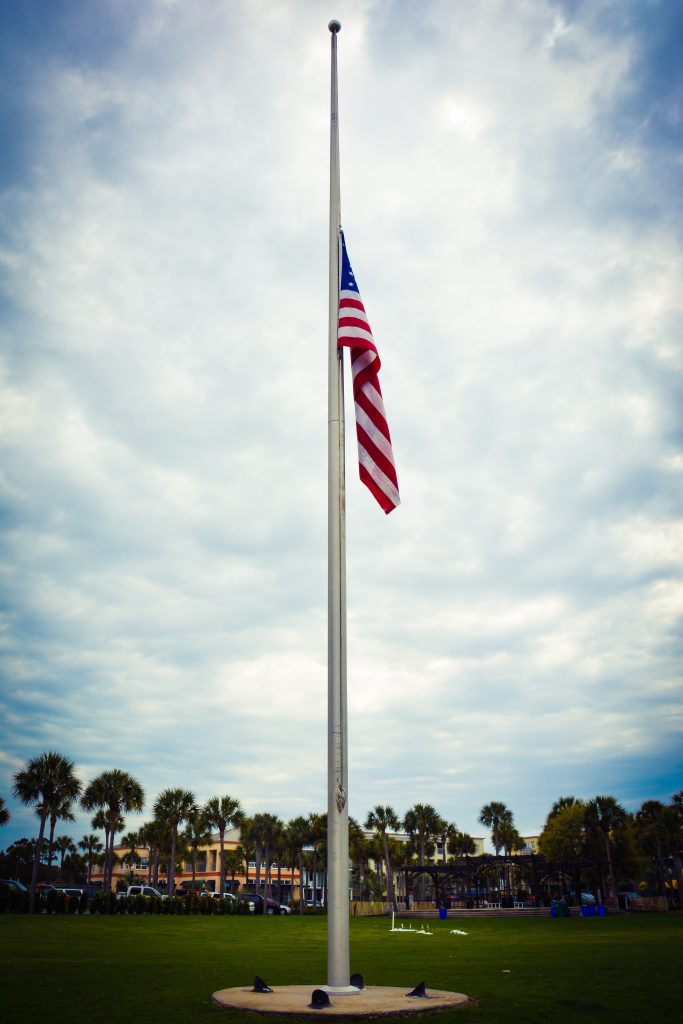
Beyond structural concerns, government facilities are often subject to specific flag display requirements under federal and state law — including lighting provisions for 24-hour display, protocol for half-staffing, and placement relative to building entrances. A professional installer who works regularly with municipal clients understands these protocols and can configure the installation accordingly.
Soil conditions vary significantly across different sites. Clay soils, fill material, high water tables, and rocky substrates each require different foundation approaches. A professional site evaluation identifies these conditions before excavation begins, allowing the right foundation design to be specified from the start — rather than discovering problems after the concrete is already poured.
For municipalities managing multiple facilities — a township with a main office, a public works garage, a recreation center, and several parks — having a single experienced flagpole contractor who can standardize specifications, coordinate permitting across locations, and provide consistent installation quality is a significant practical advantage.
When existing poles need to come down before new ones go up, our flagpole removal and flagpole relocation services handle the full scope efficiently. If a facility has an existing pole in need of repair rather than replacement, our flagpole repair services can restore function and appearance at a fraction of replacement cost.
Frequently Asked Questions: Municipal Flagpole Installation
What flagpole height is appropriate for a municipal building?
The appropriate height depends on the size of the building, the scale of the site, and the flag size to be flown. As a general guideline, a flagpole should be proportionate to the building it serves — typically 1 to 1.5 times the building height for a prominent installation. Most municipal buildings work well with 30- to 60-foot poles. Larger government complexes, plazas, and high-visibility sites often use 60- to 80-foot poles. We assess each site individually and provide specific height recommendations during consultation.
Do municipal flagpole installations require permits?
In most jurisdictions, yes. Flagpoles over a certain height — commonly 10 to 15 feet — require a building permit. Government facilities may also be subject to zoning review, historic district approvals, or state property regulations. All States Flag & Pole assists clients in preparing permit applications and provides the documentation that building departments typically require, including foundation specifications and wind-load calculations.
How deep does the foundation need to be for a municipal flagpole?
Foundation depth and diameter are calculated based on pole height, expected wind loads, and soil bearing capacity. As a general rule, the foundation depth is approximately 10% of the pole height for residential-scale poles, but municipal poles often require deeper, larger-diameter foundations. A 60-foot flagpole may require a foundation 10 or more feet deep with a substantial diameter. We provide engineered foundation specifications for every municipal project.
How long does a municipal flagpole installation take?
Timeline varies with project complexity. A single-pole installation at a straightforward site can typically be completed in one to two days once permits are in hand and materials are on-site. Projects involving multiple poles, difficult site access, crane mobilization, or complex permitting may require a longer lead time. We provide realistic timelines during the project planning phase so facilities teams can plan accordingly.
What is an internal halyard system and should my facility use one?
An internal halyard system routes the flag-raising rope through the inside of the flagpole, accessed via a lockable door near the base. For municipal installations — particularly in public-access areas — we strongly recommend internal halyard systems. They prevent unauthorized lowering of the flag, protect the halyard from weather deterioration, and eliminate the visual clutter of a rope running along the outside of the pole. They are standard on most institutional-grade flagpoles.
Can you replace an existing flagpole at a government facility?
Yes. We frequently work on replacement projects where aging or damaged poles need to be removed and replaced. Depending on the existing foundation condition, we may be able to utilize the existing foundation or install a new one. Our team handles the full scope from removal through new installation, minimizing downtime. If the existing pole is structurally sound but has hardware or cosmetic issues, our flagpole repair services may restore it without full replacement.
Do you install lighting for 24-hour flag display?
Federal flag code guidelines require illumination for flags displayed after sunset. We can coordinate underground conduit and sleeve installation during foundation work to accommodate lighting fixtures. While electrical work itself is performed by licensed electricians, our team ensures the conduit pathway is built into the foundation — making the lighting installation seamless and code-compliant.
What maintenance does a municipal flagpole require?
Commercial-grade aluminum flagpoles require minimal maintenance — primarily periodic inspection of the halyard for wear, lubrication of truck and swivel hardware, and cleaning of the pole shaft. Flags themselves require more frequent inspection and replacement due to weather exposure. We recommend a professional maintenance inspection every one to two years for municipal installations, particularly those in high-use or coastal environments. We offer maintenance and inspection services to keep your installation in top condition.
Can you handle multi-pole installations for large government campuses?
Absolutely. Campus-scale installations — such as a row of state or international flags in front of a government complex — require careful planning for pole spacing, consistent foundation depth, coordinated hardware, and uniform appearance. We have experience managing multi-pole projects and can coordinate phased installations to minimize disruption to facility operations.
Request a Quote for Your Municipal Flagpole Project
Whether you are planning a new installation, replacing an aging pole, or managing flagpole needs across multiple government facilities, All States Flag & Pole is ready to help. Contact us today for a project consultation, site evaluation, or detailed quote.
Get a Free ConsultationServing municipalities, townships, counties, and government agencies throughout Pennsylvania, Delaware, New Jersey, and the surrounding region.