


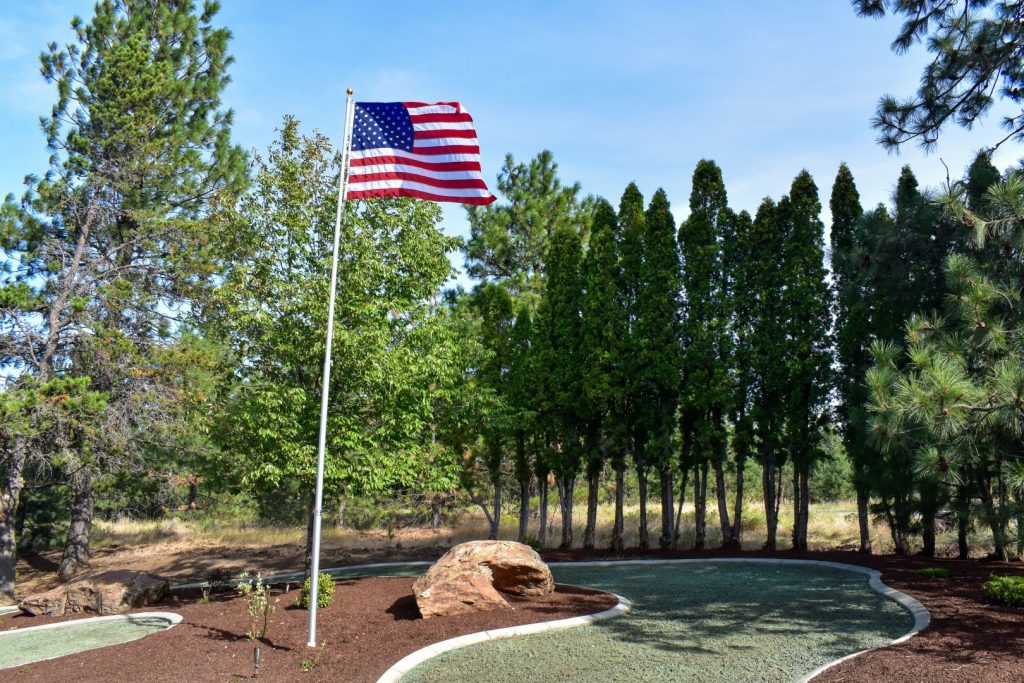
Aluminum is the most widely used flagpole material in the country — and for good reason. It combines exceptional strength-to-weight ratio, natural corrosion resistance, and a clean, finished appearance that holds up for decades with minimal upkeep. Whether you need a single residential flagpole in your front yard or a multi-pole commercial display in front of a corporate campus, school, or government building, aluminum flagpoles deliver reliable performance across virtually every environment and application.
At All States Flag & Pole, we specialize in the supply and professional installation of aluminum flagpoles for homeowners, businesses, schools, churches, municipalities, HOAs, and veterans memorials throughout Pennsylvania, Delaware, and the surrounding region. Every project — large or small — receives the same level of engineering attention, careful foundation work, and hands-on craftsmanship that has made us a trusted flagpole contractor in this area.
This page covers everything you need to know about aluminum flagpoles: how they are built, what grades and finishes are available, how the installation process works, and why professional installation matters more than most property owners initially expect.
Why Aluminum Is the Preferred Flagpole Material
When property owners and facilities managers begin researching flagpoles, they quickly discover three primary material options: aluminum, fiberglass, and steel. Each has a place in specific applications, but aluminum consistently stands out as the most versatile and cost-effective choice for the broadest range of settings.
- Corrosion resistance: Aluminum naturally forms a protective oxide layer that prevents rust. Unlike steel, it does not require painting or galvanizing to maintain its integrity in wet or coastal climates.
- Lightweight yet rigid: The weight-to-strength ratio of aluminum makes it easier to handle during installation without sacrificing structural performance under wind loads.
- Low maintenance: Anodized or satin finishes hold up year after year without repainting. Routine inspections and occasional hardware replacement are typically all that is required.
- Wide availability in commercial-grade alloys: Flagpoles made from 6063-T6 aluminum alloy meet the structural requirements of most commercial, municipal, and school applications.
- Aesthetic versatility: Aluminum flagpoles are available in satin (bare), clear anodized, dark bronze anodized, and custom powder-coat finishes to complement nearly any architectural style.
- Long service life: A properly installed aluminum flagpole with an engineered foundation can remain in service for 30 to 50 years or more.
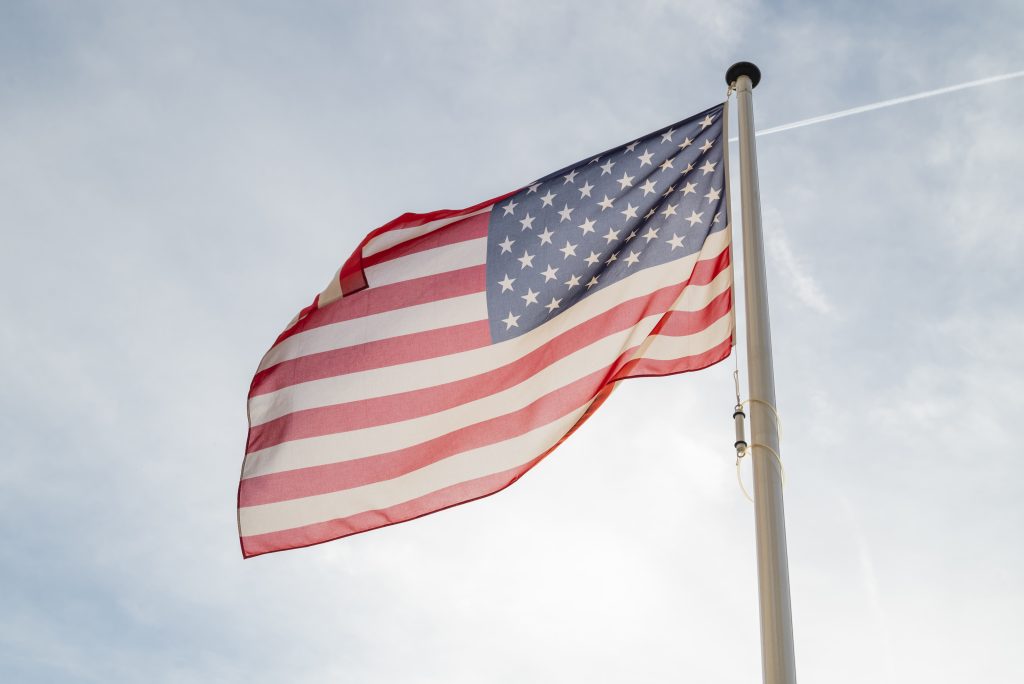
Properly installed aluminum flagpoles add lasting value and curb appeal to any property.
Internal vs. External Halyard Systems
One of the most important decisions when selecting an aluminum flagpole is choosing between an internal (cleat-lock) halyard system and an external (rope and pulley) halyard system. Each serves different needs, and our team will walk you through the trade-offs during the consultation phase.
External Halyard
The halyard rope runs on the outside of the pole and is tied off on a cleat at the base. This is the most common configuration for residential flagpoles and lower-security locations. It is easy to maintain and cost-effective. The main drawback is that the rope is accessible, which can be a consideration in public or unsecured areas.
Internal Halyard (Cleat-Lock)
The halyard is routed through the interior of the pole and secured in a locked door compartment at the base. This system is strongly preferred for commercial, municipal, school, and government installations. It protects the halyard from weather and vandalism, eliminates rope snap noise, and presents a cleaner, more polished appearance.
Motor-Driven Systems
For very tall flagpoles or facilities that require frequent flag changes without physical effort, motorized internal halyard systems are available. These are often specified for large commercial campuses, military installations, and veterans memorials where 60-foot to 100-foot poles are common.
Common Aluminum Flagpole Specifications
The table below summarizes typical commercial-grade aluminum flagpole specifications. Actual dimensions, wall thickness, and wind load ratings vary by manufacturer and application. All States Flag & Pole will help you select the appropriate specification for your project based on local wind zone requirements and flag size.
| Pole Height | Typical Application | Butt Diameter (approx.) | Recommended Flag Size | Typical Foundation Depth |
|---|---|---|---|---|
| 20 ft | Residential, small commercial | 4.5" | 3×5 ft | 4–5 ft |
| 25 ft | Residential, HOA entrance | 5.0" | 4×6 ft | 5–6 ft |
| 30 ft | Small commercial, church | 6.0" | 5×8 ft | 5–6 ft |
| 35 ft | Commercial, school | 6.5" | 5×8 ft | 6–7 ft |
| 40 ft | Commercial, municipal | 7.0" | 6×10 ft | 6–8 ft |
| 50 ft | Large commercial, government | 8.5" | 8×12 ft | 8–10 ft |
| 60–80 ft | Municipal, veterans memorial | 10"–12" | 10×15 ft or larger | 10–14 ft (crane required) |
Note on wind loads: Foundation depth and wall thickness must be engineered to meet local wind zone requirements. In the Philadelphia, PA area and surrounding Delaware Valley, flagpoles should be designed to withstand 90–110 mph wind loads per ANSI/NAAMM FP1001-07 guidelines. All States Flag & Pole accounts for these requirements on every project.
Types of Projects We Handle
Residential Properties
Homeowners throughout Pennsylvania and Delaware trust All States Flag & Pole to install aluminum flagpoles that complement their home's architecture. We handle everything from the permit inquiry to the final leveling and hardware check. A properly installed residential flagpole adds curb appeal, personal expression, and lasting value to any property.
Commercial Buildings & Office Campuses
Corporate entrances, retail centers, industrial facilities, and mixed-use developments frequently require multi-pole installations with matching flagpole heights, uniform finishes, and internal halyard systems. We coordinate with site managers and general contractors to complete commercial flagpole installations on schedule without disrupting operations.
Schools & Universities
Educational institutions require flagpoles that meet specific code standards, are durable enough for high-traffic environments, and are designed for daily flag rotation. Our school flagpole installations include properly engineered foundations, vandal-resistant internal halyard systems, and ground-level options when accessibility is a factor.
Churches & Houses of Worship
A single aluminum flagpole — or a small grouping — can anchor the entrance to a church or religious campus with quiet dignity. We work with church facilities teams to select the right height, finish, and configuration for the setting.
Municipal & Government Facilities
Municipal buildings, courthouses, fire stations, and parks require flagpoles that meet specific display requirements and endure years of daily use. All States Flag & Pole has experience with municipal projects and understands the permitting, documentation, and safety standards involved. Our municipal flagpole installation services are designed for exactly these needs.
HOA Communities & Planned Developments
Homeowners associations often require coordinated flagpole installations at community entrances, clubhouses, and common areas. We work within HOA architectural guidelines to specify and install aluminum flagpoles that meet aesthetic and structural standards while reflecting the community's identity. Learn more about our HOA flagpole installation services.
Veterans Memorials & Civic Spaces
Memorial flagpole projects carry special significance. Whether it is a three-pole veterans display or a single tall flagpole at a community park, we approach these installations with the care and professionalism they deserve.
Flagpole Replacement Projects
If your existing flagpole is damaged, outdated, or simply the wrong size for your current needs, we handle flagpole removal and flagpole relocation in addition to installing the new aluminum pole. In some cases, the existing foundation can be reused; in others, a new foundation is required. We assess each situation individually.
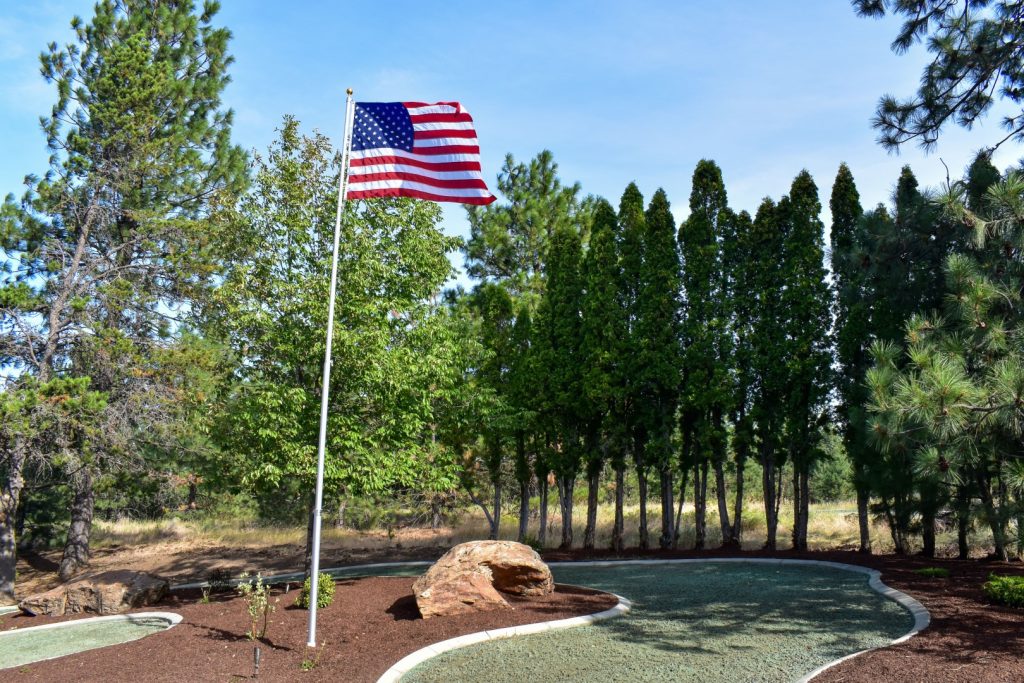
Commercial aluminum flagpole installations require precise foundation engineering and proper site coordination.
Our Installation Process
Aluminum flagpole installation is not simply a matter of digging a hole and setting a pole. A professional installation involves consultation, engineering, permitting, and several on-site steps that determine whether a flagpole stands straight, lasts for decades, and performs safely in high winds. Here is how All States Flag & Pole approaches every project.
- Initial Consultation We discuss your goals, intended flag size, aesthetic preferences, and site conditions. This conversation determines the pole height, material, finish, and halyard system that fits your project. We can consult in person, by phone, or via email depending on your preference.
- Site Evaluation We visit the property to assess soil conditions, underground utilities, drainage, surrounding structures, and access for equipment. For taller poles or crane installations, we evaluate clearances and equipment routes during this visit.
- Flagpole Selection & Engineering Based on site conditions and local wind zone requirements, we select the appropriate aluminum flagpole specification — including wall thickness, butt diameter, and foundation sleeve dimensions. For commercial and municipal projects, we provide engineering documentation as required.
- Permitting (Where Required) Some municipalities require a permit for flagpole installation, particularly for commercial properties or poles above a certain height. We advise you on local requirements and can assist with the permitting process so there are no surprises on installation day.
- Foundation Excavation & Preparation We excavate to the specified depth, position the ground sleeve or anchor bolt pattern, and set the foundation form. The foundation is poured with structural concrete and allowed to cure before the pole is set. Proper foundation work is the single most important factor in flagpole longevity and safety.
- Pole Installation Once the foundation has cured, we set the aluminum flagpole into the ground sleeve, confirm plumb alignment on multiple axes, and secure the pole. For taller installations — typically 50 feet and above — we coordinate crane flagpole installation with a licensed crane operator.
- Hardware Installation & Final Inspection We install all hardware including the truck assembly, pulley or rotating truck, halyard rope or internal cable, snap hooks, and ornamental ball or eagle finial. We fly a flag to verify the system functions correctly and inspect every component before considering the job complete.
- Maintenance Guidance Before we leave, we walk you through the basic maintenance practices that will extend the life of your flagpole and hardware — including halyard inspection intervals, hardware lubrication, and flag care.
Why Professional Installation Matters
It may be tempting to treat flagpole installation as a DIY project, but there are structural and safety considerations that make professional installation the responsible choice — particularly for anything above 20 feet or located in a high-traffic area.
- Wind load engineering: A flagpole acts as a cantilever beam in the wind. Without the correct foundation depth and pole specification for your local wind zone, a pole can fail catastrophically during a storm. A fallen pole is not just property damage — it is a serious safety hazard.
- Soil conditions vary: Sandy, clay-heavy, or expansive soils require different foundation approaches. Professional installers assess soil composition and adjust foundation design accordingly.
- Accurate plumb alignment: A flagpole that is even slightly off-plumb is immediately noticeable and reflects poorly on the property. Achieving true vertical alignment requires proper tools and experience.
- Underground utilities: Excavation near buried gas, water, electric, or telecommunications lines requires a call to 811 (Pennsylvania One Call) and careful work by experienced professionals.
- Code compliance: Commercial, municipal, and school installations often have height restrictions, setback requirements, and structural specifications that must be documented and met.
- Long-term cost savings: A correctly engineered and installed aluminum flagpole rarely needs significant repair for decades. DIY installations frequently develop problems with the foundation, alignment, or hardware within a few years, leading to costly repairs or early replacement.
Related Services from All States Flag & Pole
Aluminum flagpoles are a core part of what we do, but our services extend across the full lifecycle of any flagpole project. If you already have a flagpole that needs attention, we also offer professional flagpole repair to address damaged halyard systems, broken trucks, bent poles, or hardware failures. When a flagpole needs to come down entirely, our flagpole removal service handles the work safely and efficiently. If you are relocating your pole to a new position on the property, our flagpole relocation service manages every step of the move including new foundation installation.
For property owners considering options beyond aluminum, we also work with fiberglass flagpoles, which offer superior performance in coastal or high-corrosion environments, and telescoping flagpoles for residential applications where a ground sleeve installation is not practical. Our team will help you evaluate the right solution for your specific needs during the consultation.
Frequently Asked Questions
What is the best aluminum alloy for a flagpole?
Commercial-grade aluminum flagpoles are typically made from 6063-T6 aluminum alloy. This alloy offers an excellent combination of strength, corrosion resistance, and workability. It is the same alloy used in architectural extrusions and is well suited to outdoor exposure in virtually all climates.
How long does aluminum flagpole installation take?
For most residential installations in the 20- to 30-foot range, the on-site work takes one to two days — including foundation excavation, concrete pour, cure time, and pole setting. Larger commercial installations or those requiring crane equipment may take two to three days. Foundation concrete typically cures for 24 to 48 hours before the pole is set.
Do I need a permit to install an aluminum flagpole?
Permit requirements vary by municipality. In many residential areas, a flagpole installation does not require a building permit, but commercial properties and poles above certain heights often do. All States Flag & Pole checks local requirements for every project and will advise you on what is needed before work begins.
What flagpole height should I choose?
A general guideline is that a flagpole should be roughly 1.5 to 2 times the height of the building it stands near — though this is not a strict rule. For residential properties, 20- to 25-foot poles are common. For commercial buildings, 30- to 40-foot poles are typical. We help you evaluate height relative to your site, the flag size you want to display, and any local restrictions that may apply.
How deep should the foundation be?
Foundation depth depends on pole height, wind zone, and soil conditions. As a general starting point, the embedded depth is roughly 10% of the pole height — so a 30-foot pole typically requires a foundation 5 to 6 feet deep. However, engineering calculations based on local wind load requirements and soil bearing capacity determine the actual specification. We do not guess at foundation depth.
What finish options are available for aluminum flagpoles?
The most common finishes are satin (natural mill finish), clear anodized, and dark bronze anodized. Custom powder-coat finishes in a range of colors are also available for projects where matching architectural elements is important. Anodized finishes are more durable than paint and will not peel or flake over time.
How much maintenance does an aluminum flagpole require?
Aluminum flagpoles require very little maintenance compared to steel alternatives. We recommend inspecting the halyard rope annually and replacing it when fraying becomes visible. The truck assembly and snap hooks should be checked and lubricated periodically. The pole itself typically needs nothing beyond an occasional rinse if heavy road salt or industrial residue accumulates near the base. Flags themselves wear faster than the pole and typically need replacement every one to three years depending on size, material, and exposure.
Can you replace an existing flagpole using the same foundation?
In some cases, yes — if the existing foundation is in good condition, the right depth, and sized appropriately for the new pole's sleeve diameter. We evaluate the existing foundation during our site visit and give you an honest assessment. When a new foundation is required, we handle the complete flagpole foundation installation as part of the replacement project.
What size flag should I fly on my aluminum flagpole?
The flag's fly length (the longer horizontal dimension) should be approximately 25% of the pole height. For example, a 25-foot pole should fly a flag with a fly of approximately 6 feet — meaning a 4×6 foot flag is appropriate. Going too large strains the halyard hardware and creates excessive wind load on the pole; going too small looks disproportionate.
Do you install aluminum flagpoles for projects outside Pennsylvania?
All States Flag & Pole primarily serves the greater Philadelphia area, including Chester County, Delaware County, Montgomery County, and northern Delaware. We also serve parts of southern New Jersey. Contact us to discuss your project location and we will let you know whether we can accommodate your site.
Ready to Install Your Aluminum Flagpole?
Whether you are planning a residential flagpole for your home, a commercial multi-pole display, or a municipal installation, All States Flag & Pole is ready to help. Contact us today for a no-pressure consultation and project quote.
Request a Free Quote