


School Flagpole Installation: Professional Service for Every Campus
From elementary schools to university campuses, All States Flag & Pole delivers engineered, code-compliant flagpole installation built to honor your community and stand for decades.
Request a Free School ConsultationA Flagpole That Represents Your School's Pride
A flagpole is one of the most visible symbols on any school campus. It is the first thing students, families, faculty, and visitors see when they arrive. It flies the American flag, state flags, and school colors — marking the campus as a place of learning, civic pride, and community tradition.
Whether you are installing a new flagpole on a freshly built school, replacing a deteriorating pole that has stood for decades, or adding additional flagpoles for a ceremonial entrance, the quality of the installation matters enormously. A poorly installed pole is not just an eyesore — it is a safety hazard that can fail under wind, corrode prematurely, or lean over time as its foundation shifts.
All States Flag & Pole brings professional engineering, quality materials, and hands-on expertise to every school flagpole installation we perform. We handle the full project from site consultation through final inspection, giving school administrators, facilities directors, and purchasing departments a single, reliable partner from start to finish.
Why Schools Choose All States Flag & Pole
School districts and administrators trust us because we understand the specific requirements of institutional flagpole installation. We know that schools operate on tight schedules, have public visibility, and need work performed safely and professionally without disrupting the school day.
Proper Engineering & Foundation Work
Every installation begins with a soil assessment and properly engineered foundation. We size the foundation to meet local wind load requirements and manufacturer specifications, ensuring the pole is safe and compliant for the life of the structure.
Permitting & Code Compliance
We understand local building codes and help school facilities teams navigate permit requirements. Public schools often require additional approvals, and we ensure your project moves through the process without delays or rejected inspections.
Quality Commercial-Grade Materials
We install aluminum and fiberglass flagpoles rated for institutional use. Our poles, hardware, and internal halyard systems are selected specifically for the demands of high-visibility, high-use environments like school campuses.
Minimal Disruption to School Operations
We plan our installations carefully, scheduling foundation pours, concrete cure times, and pole setting to minimize impact on school hours, parking lot access, and athletic fields when needed.
Safety-First Installation
Our crews are experienced with large-format flagpoles and follow strict safety protocols. For taller poles, we coordinate crane installations as needed, ensuring the pole is set perfectly plumb and securely anchored.
Ongoing Maintenance & Repair Support
Our relationship does not end at installation. We offer scheduled maintenance, halyard replacement, hardware inspections, and emergency repair services to keep your school flagpole looking and performing its best year after year.
Our School Flagpole Installation Process
We follow a thorough, step-by-step process on every project to ensure the installation meets the highest standards of quality, safety, and code compliance.
Free Consultation
We start with a conversation about your school's needs — how many flagpoles, where they will be located, height requirements, and your timeline and budget.
On-Site Evaluation
Our team visits the campus to assess soil conditions, underground utilities, irrigation systems, surrounding structures, and available access for equipment.
Design & Recommendations
We recommend the appropriate pole height, material (aluminum or fiberglass), foundation depth, and halyard system based on your campus layout and wind exposure.
Permitting Assistance
Where permits are required, we provide the documentation your district needs and coordinate with local building departments to keep the project on schedule.
Foundation Preparation
We excavate to the required depth, set the foundation sleeve, and pour the concrete foundation. Concrete is allowed to cure fully before the pole is installed.
Flagpole Installation
The flagpole is set into the ground sleeve, plumbed precisely, and all hardware — truck, halyard, snap hooks, and cleats — is installed and tested on-site.
Final Inspection & Walk-Through
We inspect every component of the completed installation and walk the facilities team through proper flag flying procedures, halyard operation, and basic care.
Maintenance Planning
We discuss an annual maintenance schedule and leave you with our contact information for future repairs, halyard replacements, or hardware upgrades.
Benefits of Professional School Flagpole Installation
Choosing a professional flagpole contractor over a general contractor or DIY approach provides measurable advantages in safety, longevity, and campus appearance.
Structural Safety
An improperly installed flagpole can fail during storms, posing a serious risk to students and staff. Professional installation with a properly engineered foundation eliminates this risk.
Code Compliance
We ensure your installation meets all local building codes, wind load requirements, and school district standards — protecting your district from liability and failed inspections.
Professional Campus Appearance
A well-installed, properly aligned flagpole enhances the visual impression of your school and demonstrates care for the campus environment.
Long-Term Durability
Quality aluminum and fiberglass poles installed on engineered foundations can last 30 to 50 years with proper maintenance, providing exceptional return on investment.
Tamper-Resistant Hardware
Internal halyard systems with locking cleats protect the rope from vandalism and weather exposure — a practical advantage on busy school campuses.
Manufacturer Warranty Support
Poles installed by qualified contractors are eligible for full manufacturer warranties. DIY or non-specialist installations can void those protections.
Weather Resistance
Correctly specified poles withstand the wind, rain, and ice loads typical in Pennsylvania, Delaware, and New Jersey seasons without premature wear or damage.
Civic & Community Pride
A properly displayed American flag on a well-maintained pole reinforces the civic values and patriotism that schools cultivate in every generation of students.
Types of School & Educational Campus Projects We Handle
Our experience spans every level of educational facility. Whether you represent a small charter school or a major university system, we have the equipment, expertise, and capacity to handle your project professionally.
Equipment & Materials for School Flagpoles
The right combination of pole material, hardware, and foundation engineering is critical to long-term performance. Here is how we specify and supply materials for school installations.
| Component | Options Available | Best For |
|---|---|---|
| Pole Material | Aluminum, Fiberglass, Steel | Aluminum for most schools; fiberglass for coastal or high-wind locations |
| Halyard System | Internal (locking), External | Internal halyard strongly recommended for school campuses to prevent tampering |
| Foundation Type | Ground sleeve, Direct burial | Ground sleeve preferred for institutional poles — allows future pole removal or replacement without full excavation |
| Finish | Satin aluminum, Dark bronze, White, Custom colors | Satin aluminum is most common; bronze for traditional or brick-facade schools |
| Truck & Ornament | Spinning, Non-spinning; Eagle, Ball, Standard finial | Spinning truck reduces flag wear; eagle finials are popular for school ceremonial flagpoles |
| Height Range | 20 ft to 80 ft+ | 25–40 ft for elementary; 40–60 ft for high school; 50–80 ft for university |
| Crane Services | Available for taller installations | Required for poles 50 ft and taller or restricted-access campus locations |
We work with aluminum flagpoles from leading manufacturers and also install fiberglass flagpoles for schools in locations where corrosion resistance or RF signal transparency is a priority. Our team will walk you through the trade-offs between materials so your district can make a confident, informed decision.

Why Professional Installation Matters for Schools
A school flagpole is not a weekend project. It is a structural installation that must be engineered to withstand decades of weather, wind, and daily use — often in a highly visible location with pedestrian traffic directly around it.
Wind Loads & Structural Integrity: Flagpoles act as large wind-catching structures. In Pennsylvania, Delaware, and New Jersey, poles must be rated for local design wind speeds. An undersized or improperly set pole can lean, buckle, or fail entirely during severe weather events — creating a danger to anyone nearby.
Soil Conditions: Not all school campuses have ideal soil. Clay-heavy, sandy, or poorly compacted soils require modified foundation designs. Without a proper site assessment, a pole may begin to lean within the first few years, requiring costly correction.
Foundation Engineering: The foundation is the most critical component of the entire installation. We engineer each foundation based on pole height, pole weight, soil bearing capacity, and the American National Standards Institute (ANSI) wind load guidelines applicable to your location.
Avoiding Costly Mistakes: A flagpole installed without proper planning may fail code inspections, require relocation, or need premature foundation replacement. Investing in professional installation from the start is always more cost-effective than correcting a poorly executed installation later.
For schools that already have an existing flagpole with issues, we also provide flagpole repair services to address bent poles, worn hardware, stuck halyards, and foundation problems before they escalate into safety concerns.
Our Work in the Community
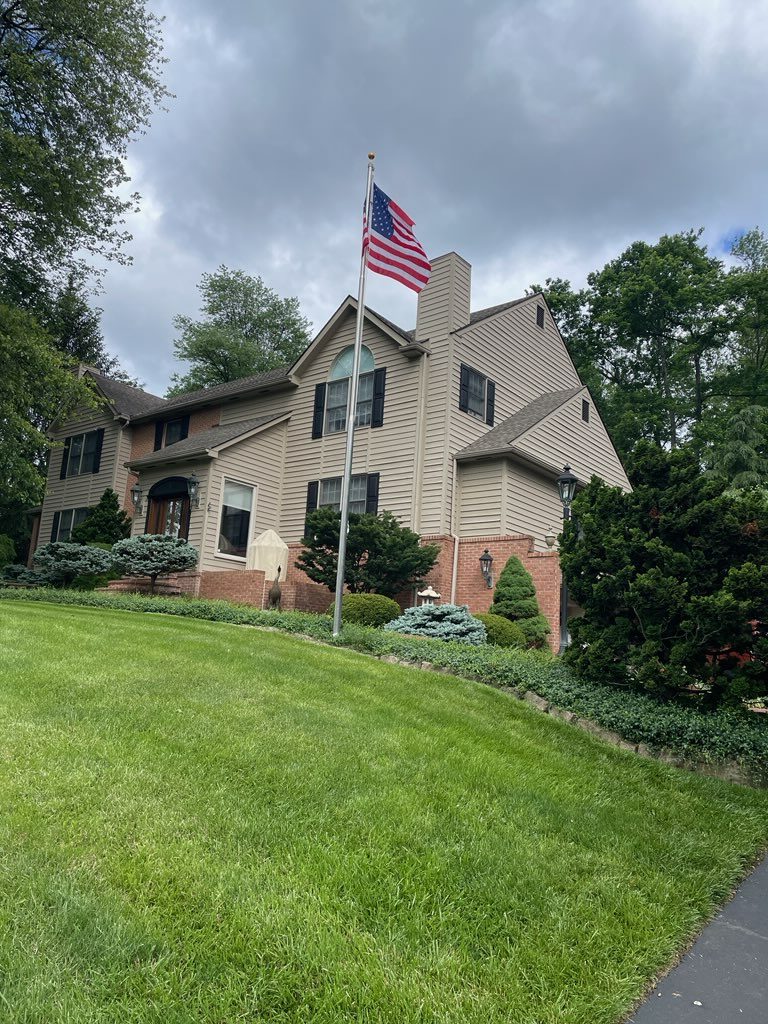
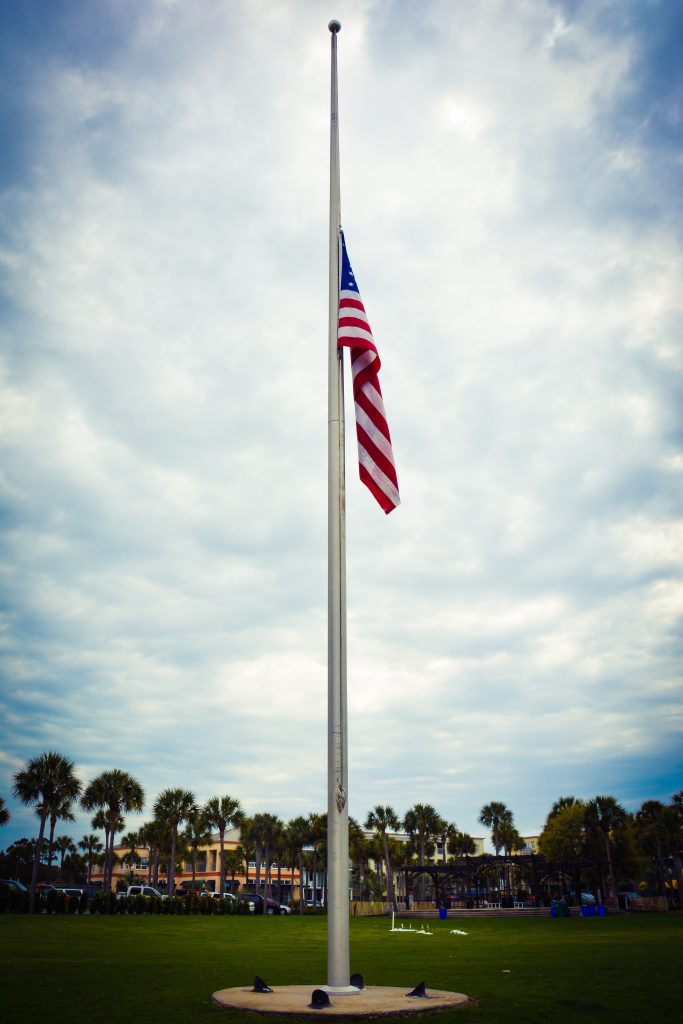
From residential streets to commercial campuses and institutional grounds, our installations reflect the same standard of quality and care every time.

Frequently Asked Questions About School Flagpole Installation
School administrators and facilities directors ask us these questions regularly. We have answered them honestly and in plain language.
What flagpole height is appropriate for a school campus?
Most K-12 schools select flagpoles between 30 and 60 feet tall. Smaller elementary schools typically use 25- to 35-foot poles, while large high schools or universities may require 50 to 80 feet. Our team evaluates your campus layout, building heights, and surrounding landscape before making a recommendation to ensure the pole is proportional and visible from key vantage points.
Do schools need permits for flagpole installation?
In most municipalities, yes. Flagpoles over a certain height — typically 15 to 20 feet — require a building permit. Public schools may also need to coordinate approvals through the school district's facilities office or local planning board. We assist you with the documentation needed and communicate with the appropriate departments to keep your project on schedule.
How long does a school flagpole installation take?
Most school flagpole installations are completed in one to two days. Foundation excavation and the concrete pour happen on the first day. Concrete typically requires 24 to 72 hours to cure before the pole is set. We schedule our work to minimize interference with the school day and communicate the timeline clearly before the project begins.
What material is best for a school flagpole?
Aluminum flagpoles are the most popular choice for schools due to their durability, corrosion resistance, and low maintenance requirements. They are available in a range of finishes and are well-suited to the Mid-Atlantic climate. Fiberglass is an excellent alternative in areas with exceptionally high wind exposure, corrosive coastal environments, or where radio frequency transparency is a factor (such as near broadcasting equipment).
Can you replace an existing flagpole at a school?
Absolutely. We handle complete flagpole removal and replacement projects. Our team will safely remove the existing pole, assess the condition of the foundation, and either reuse it (if structurally sound) or excavate and pour a new engineered foundation for the replacement pole. We also handle flagpole relocation if your school's entrance or landscaping is being reconfigured.
What is an internal halyard system and is it better for schools?
An internal halyard system routes the rope or cable through the inside of the flagpole rather than along its exterior. This protects the halyard from UV degradation, weather wear, and intentional tampering. A locking access door at the base prevents unauthorized access. For school campuses where vandalism or rope wear is a common concern, internal halyard systems are strongly recommended and are the choice we suggest for nearly every institutional installation.
How deep does the foundation need to be?
Foundation depth depends on the pole's height, its wind sail area, local design wind speeds, and the soil's bearing capacity. As a general industry guideline, the embedded depth should be approximately 10% of the total pole height, but actual engineering may call for deeper or reinforced foundations depending on site conditions. We never use a one-size-fits-all approach — every foundation is designed for the specific project.
How much maintenance does a school flagpole require?
A properly installed aluminum flagpole requires minimal ongoing maintenance. We recommend an annual inspection of the halyard, snap hooks, cleats, and truck assembly to catch wear before it becomes a failure. We offer flagpole maintenance and repair services for schools that want a professional to manage this on a scheduled basis, which is particularly helpful for districts managing multiple campuses.
Related Flagpole Services for Educational Facilities
All States Flag & Pole offers a complete range of services beyond initial installation. Whether your school needs routine service or a full-scale project, we are equipped to help.
- Flagpole Repair — Bent poles, failed halyards, broken snap hooks, and seized trucks can all be repaired without replacing the entire pole. Our repair team responds promptly to keep your flag flying safely.
- Flagpole Removal — When a flagpole has reached the end of its useful life or needs to be removed for renovation, we handle the complete extraction and site restoration process safely.
- Flagpole Relocation — Modernizing your campus layout? We can carefully remove an existing pole and relocate it to a new position while preserving the pole itself if it remains structurally sound.
- Flagpole Foundation Installation — If a foundation has cracked, shifted, or settled, we provide standalone foundation replacement services without requiring a new pole.
- Crane Flagpole Installation — For large campuses requiring tall poles or installations in areas with restricted equipment access, we coordinate crane flagpole installation services to set the pole safely and precisely.
- Aluminum Flagpoles — We supply and install commercial-grade aluminum flagpoles sized and specified for institutional applications.
- Fiberglass Flagpoles — Where corrosion resistance or signal transparency is a priority, we offer fiberglass flagpoles as an alternative to aluminum.
- Flagpole Maintenance Programs — Scheduled inspection and service agreements are available for schools and school districts managing multiple campus flagpoles.
Ready to Install a Flagpole at Your School?
Contact All States Flag & Pole today for a free consultation. We will evaluate your campus, recommend the right pole and foundation for your needs, and provide a clear, competitive quote with no surprises. Our team is ready to serve schools, school districts, and educational institutions throughout Pennsylvania, Delaware, and New Jersey.